
 Image 1 of 2
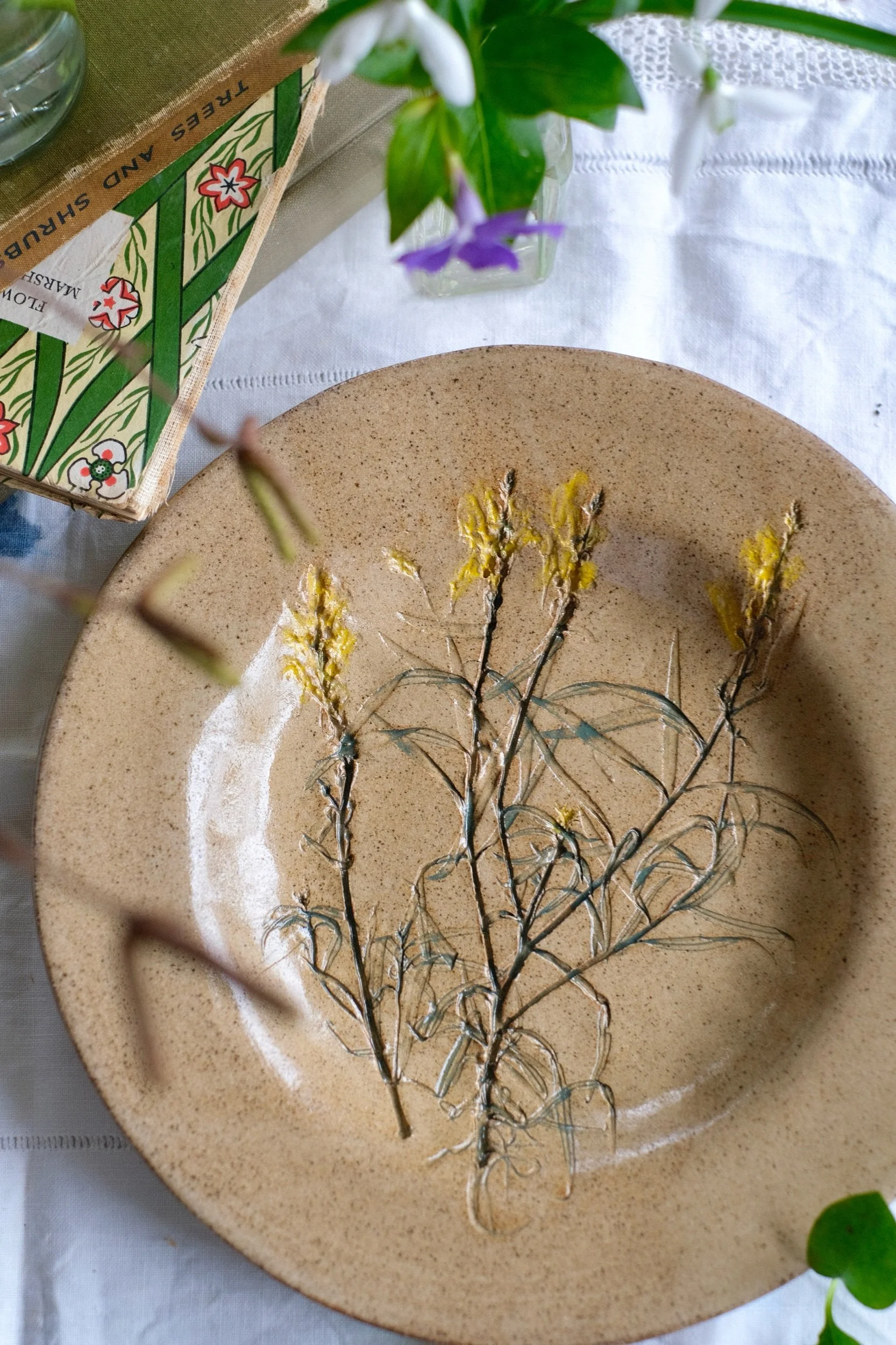 Image 2 of 2
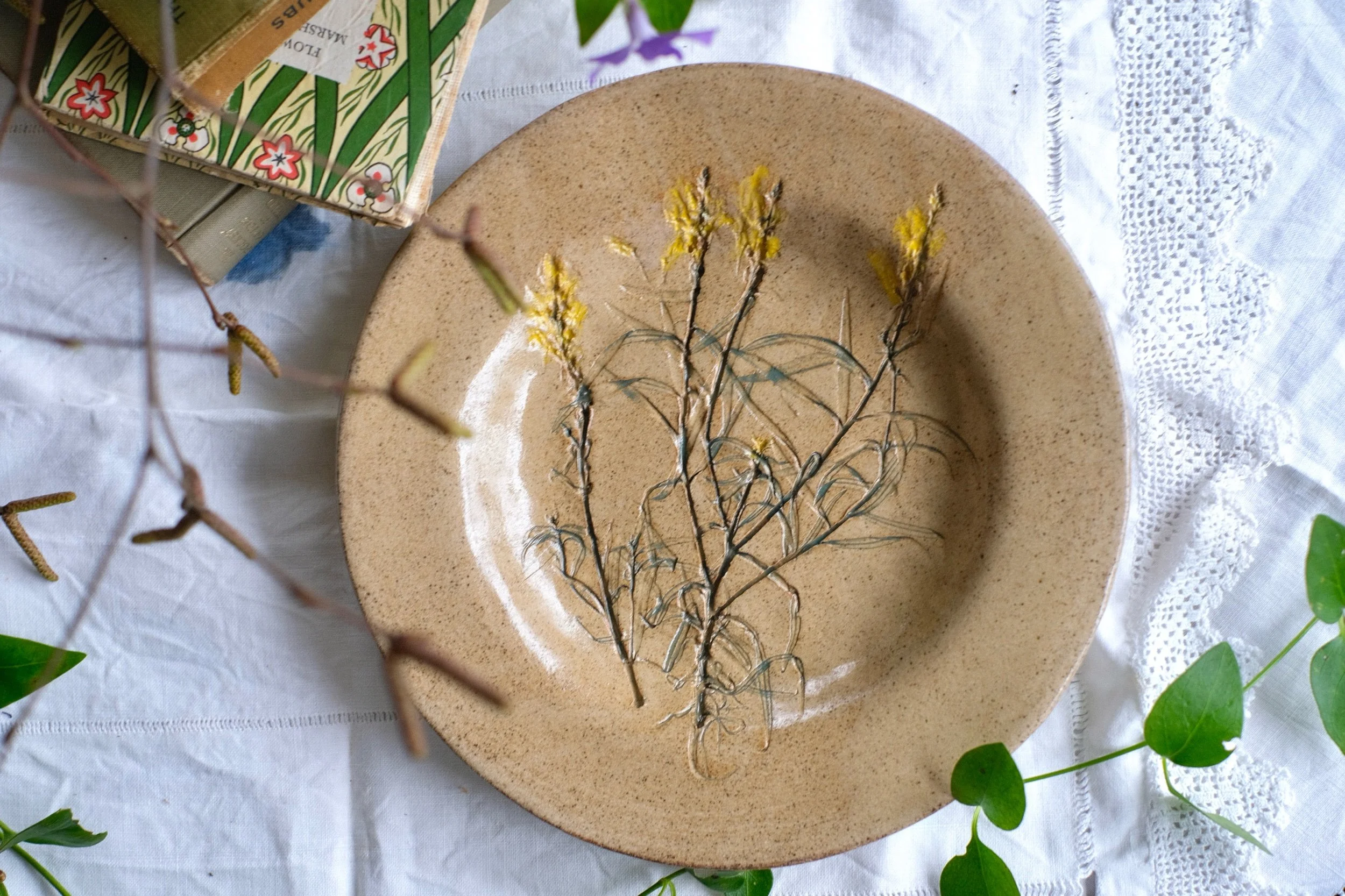
Common Toadflax
Slab made, hand painted, using a buff stoneware, pressed in plants and glazed.
Hand painted and decorated using Toad Flax.
Folklore
Common Toadflax has long been associated with protection and quiet defiance. In European folklore it was sometimes planted near homes to ward off curses and ill-fortune. Because of its small snapdragon-like flowers that seem to “snap” shut, it was also linked with secrets and hidden knowledge, symbolising things that remain unseen beneath the surface.
Medicinal
Common Toadflax has been used traditionally in herbal medicine for its cleansing and cooling qualities. It was often prepared as an infusion or ointment to soothe skin irritations and minor inflammations. Historically it has also been used to support digestion and as a gentle diuretic.
Time of Year
June – October
Common Toadflax flowers throughout the summer and into early autumn, with its yellow and orange blooms appearing along roadsides, field edges, and disturbed ground. Peak flowering usually occurs in mid- to late summer.
Common Toadflax
Slab made, hand painted, using a buff stoneware, pressed in plants and glazed.
Hand painted and decorated using Toad Flax.
Folklore
Common Toadflax has long been associated with protection and quiet defiance. In European folklore it was sometimes planted near homes to ward off curses and ill-fortune. Because of its small snapdragon-like flowers that seem to “snap” shut, it was also linked with secrets and hidden knowledge, symbolising things that remain unseen beneath the surface.
Medicinal
Common Toadflax has been used traditionally in herbal medicine for its cleansing and cooling qualities. It was often prepared as an infusion or ointment to soothe skin irritations and minor inflammations. Historically it has also been used to support digestion and as a gentle diuretic.
Time of Year
June – October
Common Toadflax flowers throughout the summer and into early autumn, with its yellow and orange blooms appearing along roadsides, field edges, and disturbed ground. Peak flowering usually occurs in mid- to late summer.